
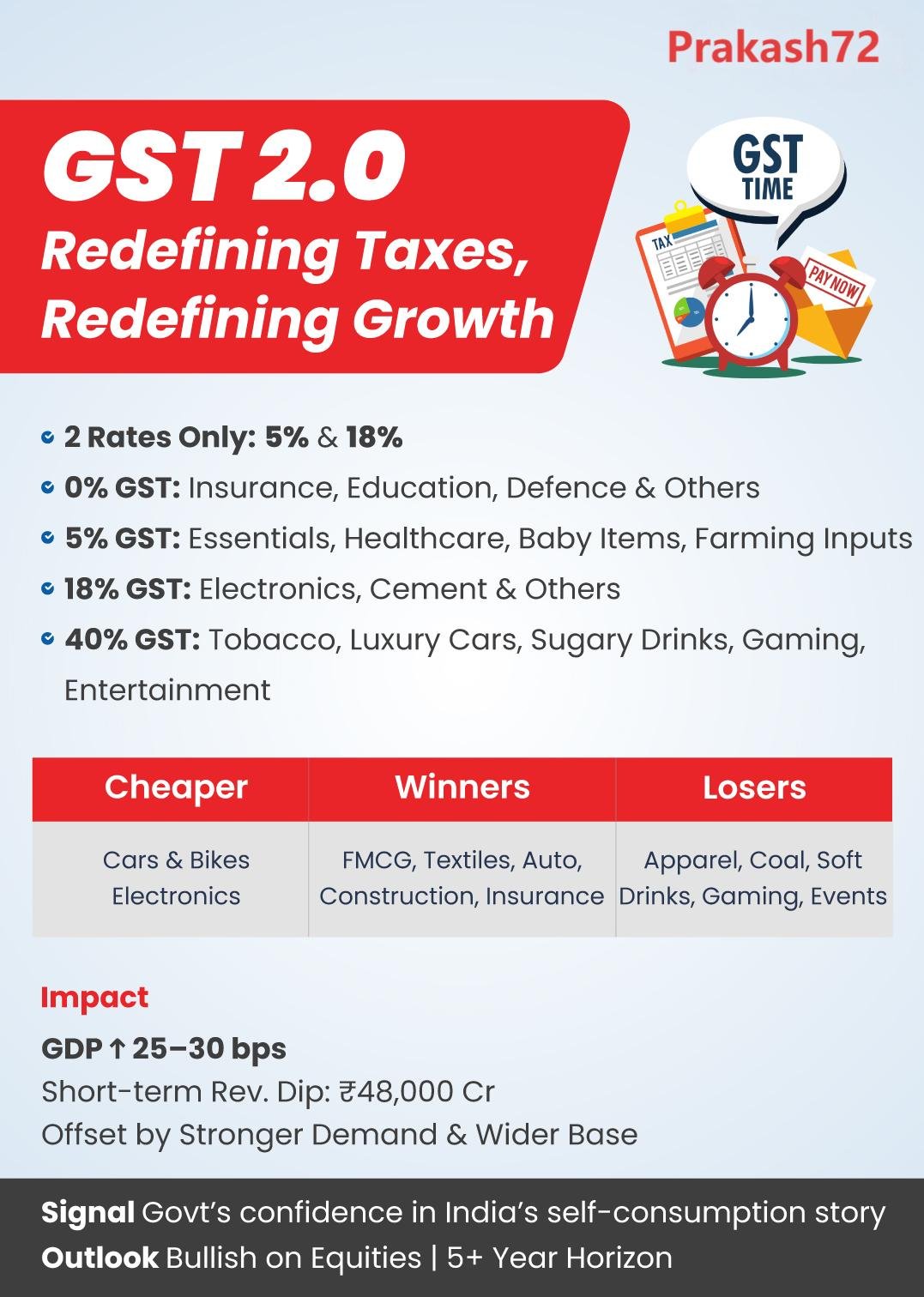
Key Highlights of the Reforms
- GST on essential items such as groceries, baby care, and healthcare has been reduced to 5%.
- Standard GST rate of 18% now applies to electronics and cement, reducing prices by around 8–9%; small cars and two-wheelers also see a 12–12.5% price dip, igniting demand.
- Essentials like life-saving drugs, defense gear, and life & health insurance are now exempt from GST, supporting affordability and domestic resilience.
- GST on luxury cars, tobacco, online gaming, entertainment, and sugary beverages jumps to 40% to discourage excess consumption while keeping essentials accessible.
Economic Impact at a Glance
- Initial government revenue loss of approximately ₹48,000 crore, forecasted to be offset over time by heightened consumer demand and a wider GST tax base.
- Lower GST on cement and equipment trims infrastructure and real estate costs.
- More affordable essentials, healthcare, electronics, vehicles, and construction materials drive increased household consumption.
- Estimated GDP uplift of 25–30 basis points, powered by rising demand and industrial expansion. Long-term benefits include stronger compliance and eventual revenue recovery.
Winners and Losers
Winners- Retail Consumers, Farmers, MSMEs, Insurance Policyholders, FMCG, Textiles, Auto, Construction
Losers- Sectors likely to be hit include apparel and clothing brands, soft drink manufacturers, the online gaming industry, entertainment etc.
Conclusion
The GST 2.0 reforms strengthen India’s growth narrative through consumption-led expansion. We remain bullish on Indian equities with a long-term view of 5+ years.